
The complete guide
How To Choose And Care For Leather Cowboy Gloves
What makes a cowboy glove
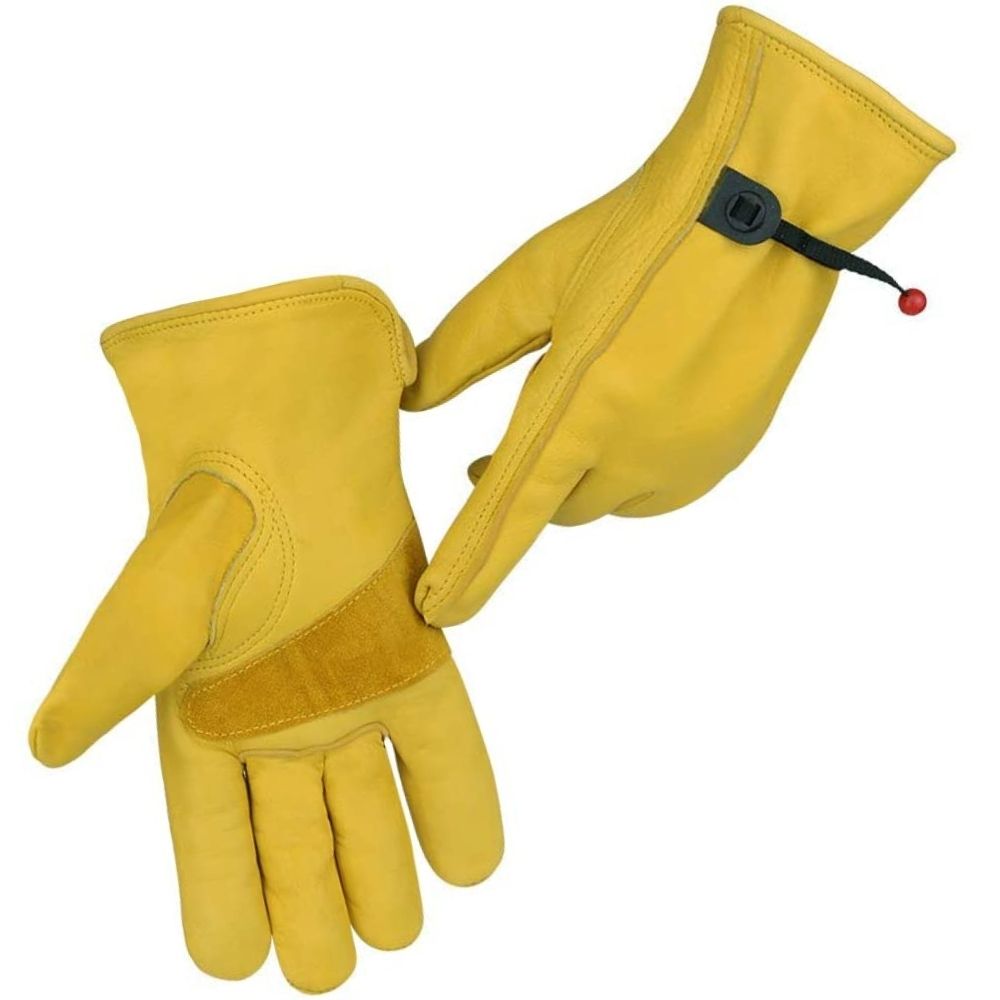
Walk into any feed store and you will see the same glove hanging by the counter. Golden cowhide, a short cuff, a thumb that looks set in at an angle. That is the cowboy glove, and the design has stuck around because it works.
The shape comes from ranch work. You need to feel a rope or a rein, so the glove cannot be bulky. You need the palm to survive wire, timber and rough handles, so the leather has to be tough. And you need to get them on and off fast, so the cuff is short and simple.
Why cowhide
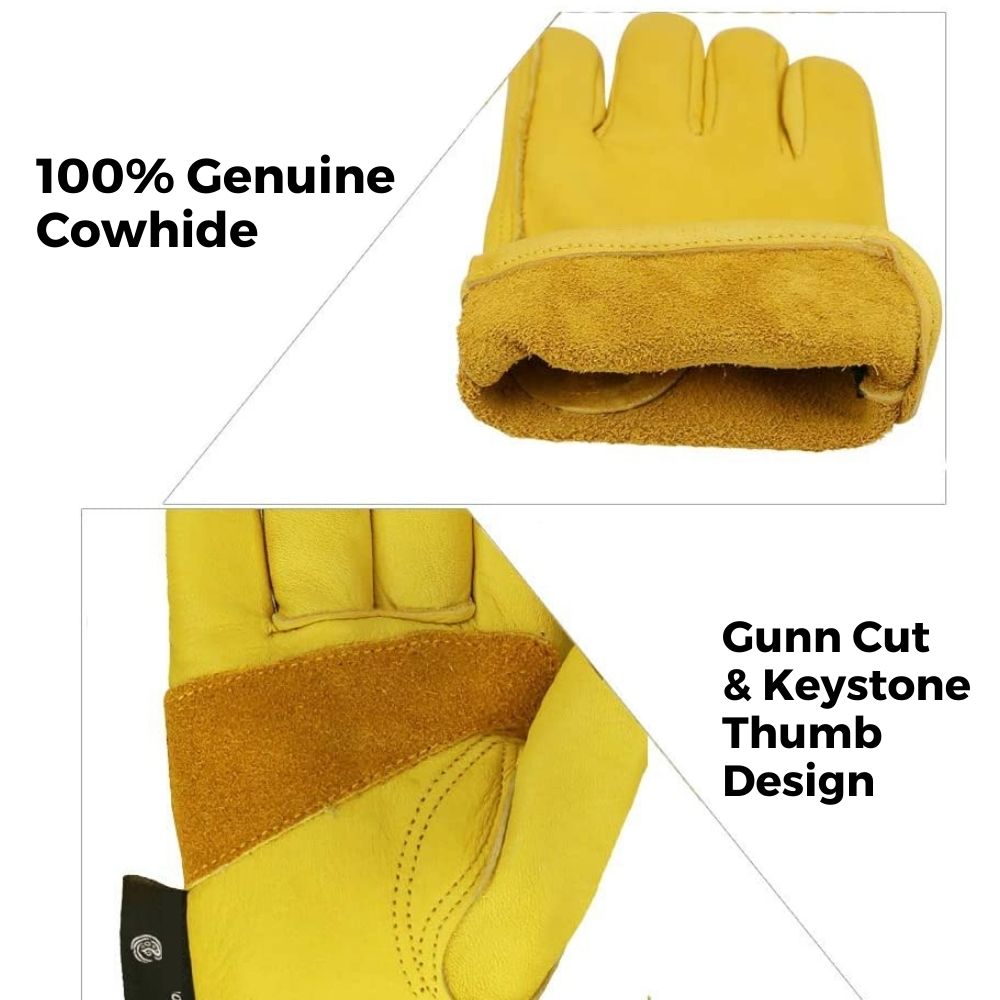
Cowhide is the workhorse leather. It is thicker and tougher than goatskin or deerskin, and it handles rough work without tearing. These gloves use cowhide at about 1.2 mm, which is a good middle ground. Thick enough to take abuse, still soft enough that your fingers can work.
New cowhide can feel a little stiff for the first few hours. That is normal. Wear the gloves for some easy jobs first and the leather loosens up and starts to follow the shape of your hand.
The details that matter
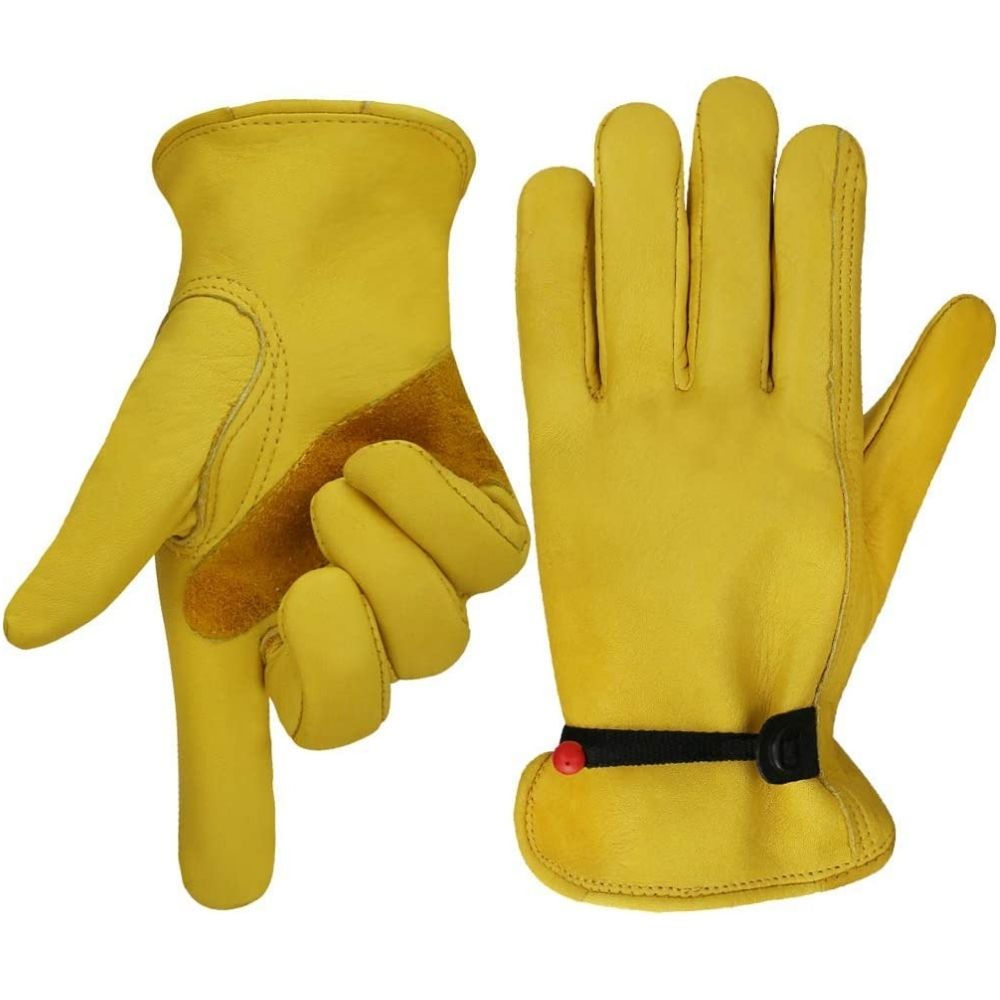
The palm patch. Gloves almost always wear through at the palm first. A second layer of split leather over the palm gives that area more life before you see daylight through it.
The Gunn cut. On a Gunn cut glove, the back of the hand is one piece and the seams on the middle fingers sit away from the palm. Fewer seams under your grip means less rubbing and fewer seams to blow out.
The keystone thumb. The thumb is a separate piece of leather shaped like a keystone. It gives the thumb more room to move than a thumb that is simply folded and sewn. You notice it most when you are gripping something round, like a shovel handle or a rope.
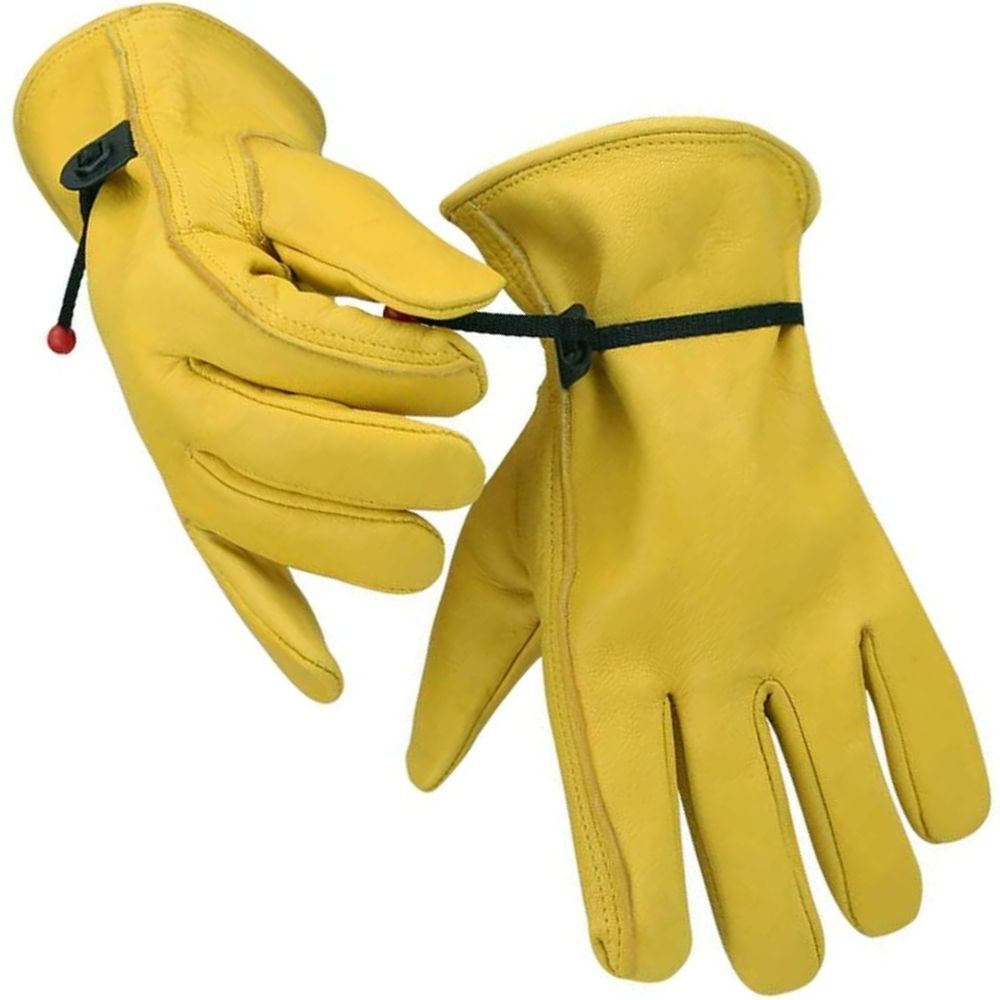
The wrist cinch. A cord and toggle let you close the cuff. On a hay day or in the garden, that keeps a lot of junk out of the glove.
Getting the size right
A glove that is too tight tires your hands. A glove that is too loose bunches up and gives you blisters. Take thirty seconds to measure.
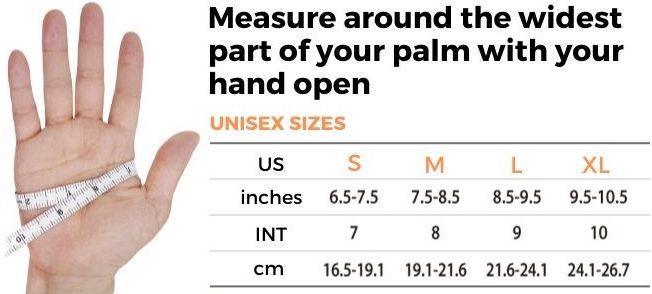
Open your hand flat. Wrap a soft tape measure around the widest part of your palm, just below the knuckles, leaving out the thumb. Then match the number:
- Small: 6.5 to 7.5 inches (16.5 to 19.1 cm)
- Medium: 7.5 to 8.5 inches (19.1 to 21.6 cm)
- Large: 8.5 to 9.5 inches (21.6 to 24.1 cm)
- XL: 9.5 to 10.5 inches (24.1 to 26.7 cm)
If you land right between two sizes, most people are happier with the bigger one. Cowhide gives a little across the hand as it breaks in, but the finger length does not change.
What they are good for, and what they are not
These gloves are made for everyday hard work. Fencing, stacking hay, mucking out, splitting and carrying firewood, pulling weeds, trimming roses, loading the truck.
They are not safety gloves with a test rating. They have no cut, puncture, heat, chemical or electrical rating. If your job calls for a rated glove, wear a rated glove. Knowing the difference keeps your hands in one piece.
Making them last
Leather is skin, and it likes to be treated that way.
- Let wet gloves dry slowly at room temperature. Never dry them on a heater or in front of a fire, because fast drying is what makes leather stiff and cracked.
- Brush off mud once it is dry, and wipe them with a damp cloth when they get grimy.
- Every so often, rub in a thin coat of leather conditioner. Wipe off the extra so your grip does not get slick.
- Store them somewhere dry and out of the sun. A hot truck dashboard dries leather out fast, and a damp shed can turn it moldy.
Look after a good pair of cowhide gloves and they will be with you for a lot of fence lines.